
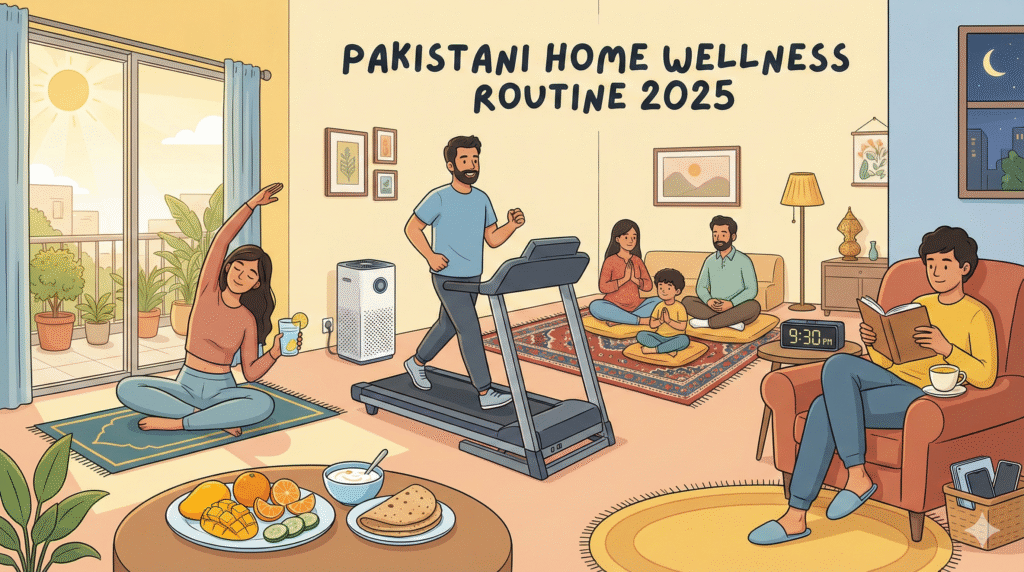
You wake up, stretch, and wonder: “How can I really feel better every day without a big cost or gym-membership?” In this guide, you’ll find a simple, doable wellness routine just for you. Follow these steps, and you’ll soon feel more energetic, clear headed, and balanced even at home.
Why A Daily Wellness Routine Matters
- Small, consistent habits, more than occasional big efforts, build long-term health.
- Good hydration, proper food, moderate movement, restful sleep and some mental care together support your body and mind.
- Recent scientific evidence shows even light daily activity — like walking a few thousand steps can improve brain health and slow cognitive decline.
Build Your Home Wellness Routine, Step by Step
Morning Set the Tone for the Day
- Drink water first thing. After sleeping 6 to 8 hours, your body needs fluids. Drinking a glass of water wakes up digestion, cleanses toxins, and hydrates skin and organs.
- Sunlight + Fresh Air (if possible). Open the windows or step out on the balcony for a few minutes. This helps reset your body clock and boosts mood. Many wellness guides highlight this as simple but powerful.
- Gentle Movement or Stretching. Even a 5 to 10 minute stretch or light activity helps blood flow. It wakes up your body gently without stress.
Nutrition & Hydration Fuel for Body and Brain
- Eat a Balanced Breakfast. Choose local foods eggs, whole grains, seasonal vegetables or fruit. This stabilizes energy and helps you avoid midday slumps.
- Drink Water Throughout the Day. Aim to sip water regularly. Our bodies run on water. It helps digestion, keeps skin healthy, cushions organs and supports all vital functions.
- Use Local, Seasonal Foods When Possible. In Pakistan, seasonal fruits/vegetables are often more nutritious and cheaper ideal for a wellness routine that’s realistic. Health advice often highlights using local, natural foods.
Movement Keep It Simple, Keep It Daily
- Daily Walk or Light Activity. A recent 2025 study found that walking just 3,000 to 5,000 steps per day can slow cognitive decline by about 3 years in older adults and 5,000 to 7,500 steps could delay decline by up to 7 years.
- Consistent, Not Intense. You don’t need heavy workouts, even daily walks, stretching or simple home exercises help. Wellness experts emphasise consistency over intensity.
- Use Natural Movement e.g., Household Chores, Light Workouts. Especially useful if you work long hours at home. Home-based routines are common in wellness guides.
Mental Wellness Calm Mind, Strong Body
- Short Mindfulness or Breathing Practice. Even 5–10 minutes of deep breathing or quiet reflection reduces stress, clears your mind, and improves focus.
- Limit Screen Time Before Bed. Avoid heavy social media, phones or work just before sleep. Unwinding helps your brain relax and improves sleep quality. Many guides highlight this as part of sleep hygiene.
- Stay Connected With Loved Ones or Community. Chatting with family or friends — even a short call — can uplift mood, reduce stress, and give a sense of belonging.
Sleep Your Body’s Daily Reset
- Prioritise 7 to 9 Hours Sleep. Quality sleep repairs the body, stabilises mood, and helps maintain overall wellness. Experts often put sleep at the core of daily health.
- Create a Simple Bedtime Ritual. Maybe light stretching, reading, or calm time — nothing screens, caffeine, or heavy meals. This helps signal your body to wind down and sleep deeply.
Example Pakistani Home Routine (Working Person)
| Time of Day | What to Do |
| 6:30–7:00 AM | Wake up, drink a glass of water, open window/ balcony for fresh air, 5 min stretch |
| 7:15 AM | Breakfast eggs/eggs omelette + roti or whole-grain toast + fruit or chai with less sugar |
| 9:00–5:00 PM | Work/study keep water bottle nearby, sip regularly; short walking break after lunch |
| 6:00 PM | 20 to 30 min walk or light home exercise (bodyweight) |
| 8:00 PM | Dinner home-cooked meal with vegetables, lentils or lean protein |
| 9:30 PM | Mindfulness or deep‐breathing 5 to 10 min; turn off screens |
| 10:30–11:00 PM | Bedtime ensure calm, dark, cool sleep environment |
Even doing 5 of 7 days can bring benefits if consistent.
Why This Works (Backed by Science)
- Water makes up ~60% of the human body. Staying hydrated helps digestion, joint lubrication, temperature regulation, and cognitive function.
- Regular light physical activity (e.g. walking 3,000–7,500 steps daily) is linked with slower cognitive decline, less risk of dementia, better brain health even without gym workouts.
- Daily wellness routines combining nutrition, movement, mental care, and sleep help maintain stamina, mood, and long-term health.
Tips For Pakistani Homes & Lifestyle
- Use your local foods. Seasonal vegetables, lentils, eggs are all accessible and nutritious.
- Adapt to the weather. During hot months, hydrate more, avoid heavy midday walks, maybe walk early in the morning or after sunset.
- Keep it affordable. Wellness doesn’t need supplements or fancy gear water, walking, home cooked meals, rest.
- Be realistic. If you can do 70 to 80% of routine most days — that’s still powerful. Consistency matters more than perfection.
Small Habits, Big Change: Your Wellness Journey Starts Today.
You don’t need a gym membership or luxury lifestyle to build a strong daily wellness routine. Simple habits — good hydration, home-cooked meals, daily movement, restful sleep and calm mind — can transform how you feel. Start small today, stay consistent, and watch your health and mood improve over time.
FAQs
How much water should I drink daily in Karachi heat?
Aim for 2–3 liters/day, depending on your activity and weather. Sip slowly throughout the day, not all at once.
I don’t have time for long exercise. Is walking short distances enough?
Yes. Even 3,000–5,000 steps a day showed benefits for the brain and overall health. Light activity counts.
What if I sleep late because of work or study?
Try to maintain consistent sleep time. Even 6 to 7 hours of good quality sleep daily helps. Avoid screens and caffeine before bed.
I eat simple, local Pakistani food. Can that be healthy enough?
Absolutely. Balanced meals with vegetables, lentils, eggs or lean proteins plus whole grains give nutrition without costly imports.
How soon can I see results from this routine?
With consistency, you may feel more energy, better mood, clearer mind within a few weeks. Long-term benefits like better heart health, stronger immunity build over months and years.